
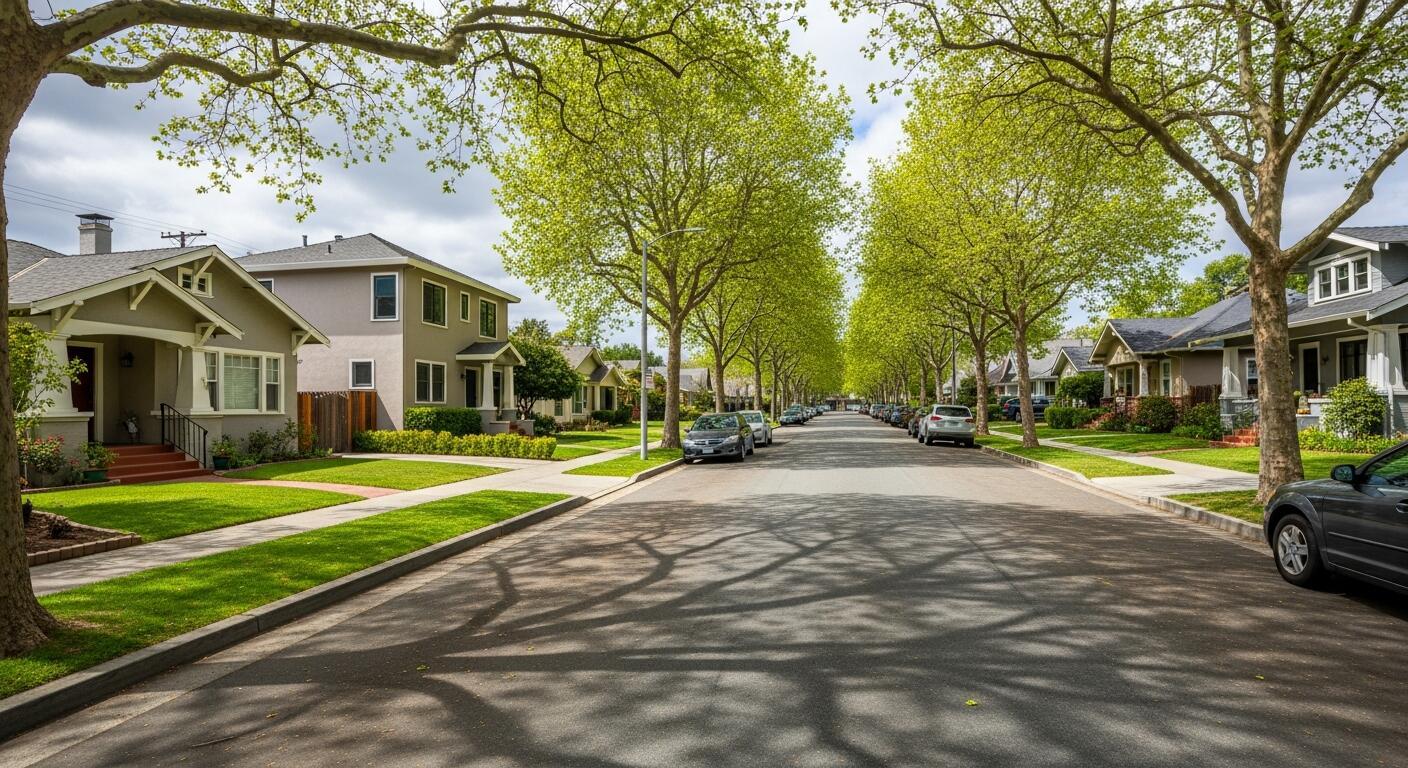
The house gets the attention, but the neighborhood is what shapes your daily life.
Where you shop, how long your commute takes, how quiet your evenings are, what your weekends feel like. All of that comes from the location, not the property itself.
This is also what drives long-term value.
Two similar homes can perform very differently over time depending on the neighborhood they’re in. That’s why this step matters more than most buyers realize, and it’s also one of the most skipped.
It’s easy to focus on photos, upgrades, and layout. It takes more effort to evaluate the area around it. But if you get the neighborhood wrong, the house won’t fix it.
Schools
For many buyers, especially families, schools are the first filter.
The mistake is relying on a single rating and stopping there.
School rating sites give you a starting point, not the full picture. Those numbers are often based on test scores and broad data that don’t always reflect what your experience will actually be.
A school with a high rating might look great on paper but may not align with what you value. On the flip side, a lower-rated school might have strong programs, great teachers, and a community that works well for your situation.
What you want to look at is consistency over time, not just a snapshot. Are scores improving or declining? What programs are offered? How involved are parents?
Also consider proximity. A great school that requires a long commute every day can become a burden.
If schools matter to you, dig a little deeper than the headline number. That’s where you get a more accurate read.
Safety
Safety is another area where buyers either overreact or don’t look closely enough.
You can pull crime data online, and you should. It gives you a general sense of what’s happening in the area. But not all crime impacts daily life the same way.
Property crimes like car break-ins or package theft are more common in many areas and can affect your day-to-day experience more than isolated incidents that show up in statistics.
The best thing you can do is combine data with real-world observation.
Drive the neighborhood at different times of day. Morning, afternoon, evening. Pay attention to how it feels. Are people out walking? Does it feel active or empty? Are homes well maintained?
This gives you context that numbers alone won’t provide.
Commute and Accessibility
This is one of the biggest factors in Contra Costa and Solano County, and it’s often underestimated.
A home might check every box until you realize what the commute actually looks like.
Highway 4, Interstate 80, and access to BART all play a major role depending on where you work. Traffic patterns can vary significantly depending on time of day and direction.
The biggest mistake buyers make here is guessing.
They look at a map, see a distance, and assume it’s manageable. Then they move in and realize the commute is longer or more stressful than expected.
The solution is simple. Test it.
Do the drive during the time you would actually be commuting. See how long it takes. See how it feels.
A slightly longer commute might be fine if everything else fits your lifestyle. But you want to know that upfront, not after you’ve already bought the house.
Signs of Future Growth
If you’re thinking long term, this is where things get interesting.
Some neighborhoods are stable. Others are evolving.
The ones that are improving tend to show signs before prices fully reflect it.
Look for new businesses coming in. Restaurants, retail, and services often follow growth. Pay attention to infrastructure projects. Road improvements, public transit expansion, and community development all signal investment.
School improvements can also be a strong indicator. When schools improve, demand often follows.
You can also look at the overall feel of the area. Are homes being updated? Are there new developments nearby? Is there a sense of momentum?
You don’t need to predict the future perfectly. You just need to recognize when an area is moving in the right direction before everyone else catches on.
Local City Snapshot
Each city in this part of the Bay Area has its own personality. Understanding the differences helps you narrow down what fits your lifestyle.
Hercules tends to attract buyers looking for a quieter, more suburban feel with newer developments and a strong sense of community. It’s popular with commuters who want access to I-80 while staying a bit removed from busier areas.
Benicia has a completely different vibe. It’s more historic, more walkable in certain areas, and has a waterfront charm that a lot of buyers are drawn to. It feels smaller and more relaxed compared to surrounding cities.
Walnut Creek is one of the more established and higher-demand areas. Strong schools, a vibrant downtown, and good access to BART make it a top choice for buyers who want convenience and amenities.
Concord offers more variety. You’ll find a mix of neighborhoods, price points, and property types. It’s a good option for buyers looking for value while still staying connected to central Contra Costa.
Fairfield has been growing steadily and often appeals to buyers looking for more space at a more accessible price point. It’s also a key location for those commuting between different parts of the region.
Vallejo tends to attract buyers looking for opportunity. It has more variability depending on the neighborhood, but it also offers potential upside for buyers who are willing to be strategic.
None of these are universally better than the others. It comes down to what fits your priorities.
Stop Choosing Homes Without Understanding the Neighborhood
This is where a lot of buyers get it wrong.
They find a house they like and try to make the neighborhood work. It should be the other way around.
Start with the area. Then find the home within it.
If you’re not sure how to evaluate different neighborhoods or want a clearer breakdown of what actually fits your lifestyle and goals, this is where having local guidance makes a difference.
If you want to walk through different areas, compare options, and get a real feel for what works before you make a decision, reach out.
A quick neighborhood consultation can save you from choosing the wrong location and help you find the one that actually fits how you want to live.
Check out this article next